
High-Converting Legal Landing Pages
Convert more inquiries with focused landing pages. Learn anatomy, copy, design, A/B testing, and proven conversion tactics.
Author: App Wizard
Published on December 28, 2025
Share this article
Share with your network or copy the link
What is a Legal Landing Page and Why Separate from Your Homepage?
A landing page is a focused web page designed to achieve one specific goal: getting a visitor to take an action (fill out a form, call, or schedule a consultation). Unlike your homepage, which provides broad information, a landing page is laser-focused on converting one visitor segment.
Types of Legal Landing Pages
1. Practice Area Landing Pages: "Personal Injury Attorney" → focuses on personal injury clients only
2. Location-Specific Pages: "DUI Lawyer in Denver" → targets clients in a specific geographic area
3. Problem-Focused Pages: "Facing Divorce? Here's How We Help" → addresses a specific client problem
4. Campaign Pages: Created for paid advertising campaigns to improve relevance and conversion
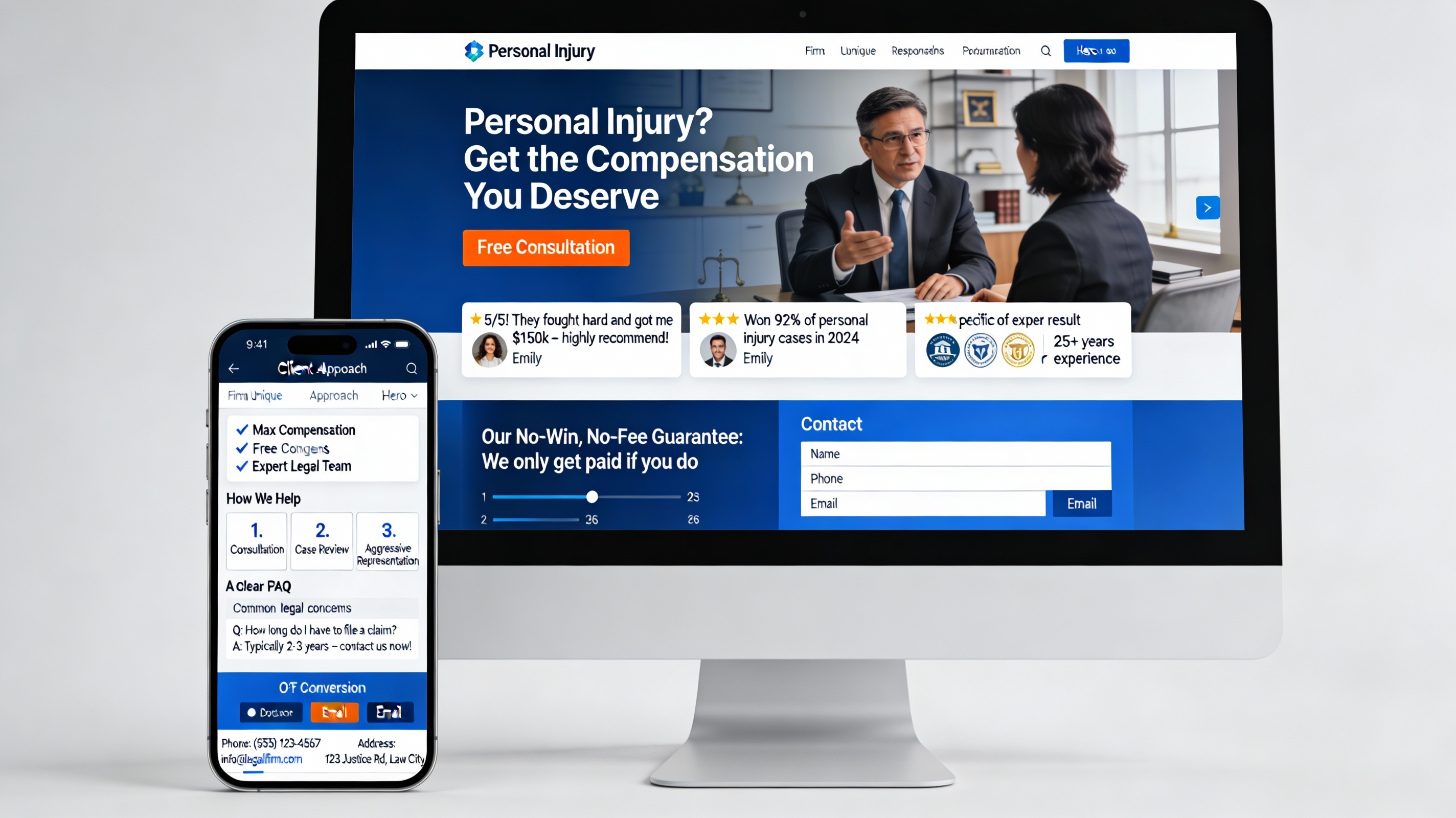
The Anatomy of a High-Converting Legal Landing Page
Headline (Most Important): Address your visitor's main concern and include the benefit.
Subheadline: Expand on the headline and build trust.
Hero Image or Video: Professional image showing your office, team, or client success. Video testimonials are powerful.
The Problem Section: Identify and validate your visitor's pain point.
The Solution Section: Show how you solve their problem.
Social Proof: Include testimonials, case results, and reviews.
Call-to-Action: Make it prominent and specific.
Contact Form: Keep it short (name, email, phone, brief description).
Trust Signals: Display your credentials, awards, and memberships.
Best Practices for Legal Landing Page Copy
Use "You" Language: Focus on the visitor's needs, not your firm's accomplishments.
Be Specific: Use numbers and specific details instead of vague claims.
Address Objections: Anticipate concerns and address them directly.
Optimization Tips
Mobile-First Design: Design for mobile first, then enhance for desktop.
Single-Column Layout: Easier to follow on mobile and creates a natural reading flow.
Bullet Points: Break up text into scannable bullet points.
Directional Cues: Use arrows and images pointing toward your CTA.
Testimonial Videos: Video testimonials convert 80% better than text.
A/B Testing Variables
Test these elements to improve conversion: headline variations, form field count, CTA button color and copy, hero image vs. video, testimonial placement, and form submission process (one-step vs. multi-step).
Measuring Landing Page Performance
Conversion Rate: Percentage of visitors who fill out the form or call
Quality of Leads: What percentage of form submissions are qualified prospects?
Cost Per Lead: If paid advertising, calculate your cost per qualified lead
Bounce Rate: Percentage of visitors who leave without taking action
Conclusion
High-converting legal landing pages focus on one visitor segment and one goal. By following these principles—compelling headline, clear problem/solution, social proof, and strong CTA—you'll significantly improve your conversion rate and cost per lead.